Contouring Techniques: How to Define Your Face with Makeup
Unlock the Art of Contouring
Mastering the skill of contouring can transform your makeup routine, giving your face a beautifully defined shape. With just a few techniques, you can enhance your natural features and achieve that coveted sculpted appearance. Ready to elevate your makeup game?
What is Contouring?
Contouring involves using makeup products to create shadows and highlights that reshape the face. This technique utilizes both darker shades to create depth and lighter shades to bring specific areas forward. As a result, you can:
- Emphasize cheekbones: By applying a darker shade just beneath the cheekbone and blending it out, you can create the illusion of a higher and more defined cheekbone.
- Minimize the appearance of the nose: A subtle contour along the sides of the nose can create a slimmer look, while highlighting the bridge can draw attention to the center.
- Define the jawline: Using a contour shade along the jawline can make the face look more angular and refined, perfect for creating that sharp, chic appearance.
- Lift the brow area: Applying a highlighter above the brow can pull attention upward, giving your eyes a more lifted appearance.
Why Contour?
Contouring is not just about following trends; it’s about enhancing your unique features. This artistry allows you to:
- Feel confident in your look: A well-contoured face can enhance your self-esteem, making you feel more glamorous and put-together, whether you’re preparing for a major event or a casual day out.
- Tailor techniques to suit your face shape: Different face shapes require different contouring techniques. For example, round faces may benefit from focusing contour on the sides, while more angular faces might need emphasis on the jawline.
- Experiment with different styles to find what works best: Contouring is highly versatile. From natural everyday looks to bold and dramatic styles for a night out, there are countless ways to explore this makeup technique.
In the following sections, we will delve into various contouring techniques, exploring products to use and tips to achieve the best results. Whether you’re a makeup novice or a seasoned pro, there’s always something new to learn when it comes to defining your face with makeup. Highlighting products can include cream and powder formulas, with each offering a different finish and ease of application. Let’s discover the essentials of contouring together!
As we embark on this journey, remember that contouring is as much about personal style as it is about technique. Take time to practice different methods in front of a mirror, observe what looks best on you, and don’t hesitate to seek out tutorials tailored to your specific face shape and skin tone. The world of contouring is rich with potential, inviting anyone to unlock this transformative art.
DISCOVER MORE: Click here for expert makeup techniques
Essential Contouring Techniques
To master the art of contouring, it’s essential to understand the variety of techniques you can employ to achieve a beautifully sculpted look. Depending on your facial features and personal preferences, you may find that certain methods resonate more with you than others. Here, we will explore some key techniques that can help define your face effectively.
1. The Classic Contour
The classic contour technique utilizes both cream or liquid contour products and highlighters for a seamless finish. Here’s a step-by-step guide:
- Choose the right shades: For the contour, select a shade that is 2-3 shades darker than your skin tone, while the highlighter should be 1-2 shades lighter.
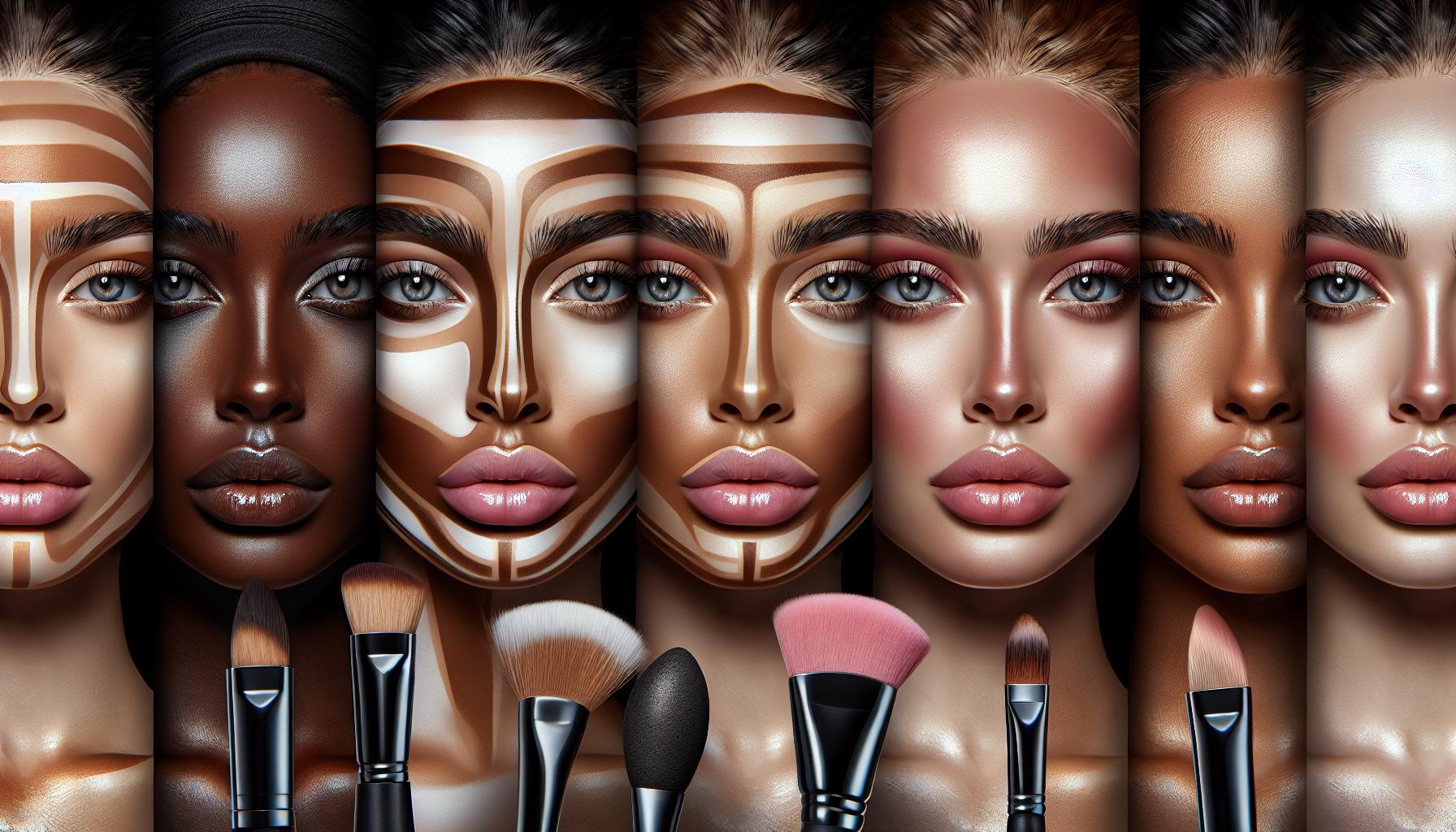
- Map your face: Use a makeup brush or a beauty sponge to apply the contour product along your cheekbones, jawline, and the sides of your nose. Highlight the bridge of your nose, the high points of your cheeks, and your brow bones.
- Blend, blend, blend: The key to a natural look is seamless blending. Use a fluffy brush to blend out the contour and a smaller brush or fingertip for the highlighter, ensuring there are no harsh lines.
2. The 3D Effect
This advanced technique takes contouring a step further by creating a three-dimensional effect on the face. Here’s how to apply it:
- Use multiple product textures: Combine cream, liquid, and powder contours to create depth. Start with creams for a base layer and follow with powder for added definition.
- Focus on specific areas: Contour beneath the chin and upper forehead to minimize larger areas while highlighting the center of the face to bring attention to your features.
- Layer wisely: Apply the darker contour in stages. Layering allows you to gradually build intensity while maintaining a natural appearance.
3. Nose Contouring
Nose contouring can be a game-changer for achieving that perfect profile. Here’s a process you can follow:
- Use a small brush: A precise application is crucial—choose a small, angled brush for accuracy.
- Apply contour along the sides: Sweep the darker shade down each side of the nose, ensuring that the line is thin and even.
- Highlight the bridge: Apply a small amount of highlighter down the center of the nose to create the illusion of length and lift.
As you explore these techniques, remember that practice is key to achieving the desired results. It’s perfectly okay to experiment and find what works best for your unique facial structure. Don’t forget to consider factors such as lighting and the occasion, as they can significantly impact the look of your contouring. In our next sections, we will dive deeper into products and tools that can enhance your contouring experience, making it easier than ever to define and sculpt your face.
Exploring Key Contouring Techniques
When it comes to contouring, understanding your face shape is crucial. Each face shape has unique characteristics that dictate the most effective contouring approaches. For instance, oval faces can utilize subtle contouring to enhance their natural features, while round faces may benefit from sharper cheekbone definitions. In this section, we will dive into specific techniques tailored to various face shapes and how to apply them correctly.
1. Contour for Different Face Shapes
For a square face, focus on softening the angular features. Apply contour along the jawline and temples to create a more oval appearance. Conversely, for a heart-shaped face, contouring the forehead and chin can help achieve balance. The key is to highlight and accentuate the natural assets of your unique face shape.
2. Tools and Products for Perfect Contouring
Choosing the right tools can markedly influence the final look. Sponges, brushes, and even fingers can create distinct finishes, ranging from a flawless airbrush look to a more natural appearance. Use creams or sticks for a dewy finish and powders for a matte effect. Don’t forget to blend thoroughly to achieve seamless results; this is crucial for avoiding harsh lines that can detract from your overall makeup application.
3. Lighting and Skin Type Considerations
Another essential factor is lighting. Daylight can be unforgiving; thus, practice contouring under similar lighting conditions to when you’ll be showcasing your makeup. Moreover, different skin types may require adjusted techniques; oily skin might need more powder products to prevent slipping, while dry skin could benefit from cream formulations for better hydration and blendability. By mastering these techniques, you’ll be able to create dimension and definition in your face, enhancing your natural beauty with makeup. To further enrich your contouring arsenal, it’s important to continuously experiment and adjust your approach based on personal reflection and preference. This journey will not only improve your technique but also bolster your confidence.
| Category 1 | Category 2 |
|---|---|
| Technique Customization | Adapting techniques based on face shape maximizes contour effects. |
| Product Selection | Choosing the right products ensures longevity and desired finish for all skin types. |
DISCOVER MORE: Click here to learn about the latest advancements
Innovative Contouring Strategies
In addition to the classic and 3D techniques we’ve explored, there are several innovative contouring strategies that can elevate your makeup game and tailor your look to your personal style. Each of these methods offers a unique approach to defining your face and allowing for creative expression.
4. Soft Focus Contouring
The soft focus contouring technique is ideal for those who prefer a more subtle and natural look. This method blurs the lines between contour and highlight, creating a gentle illumination that enhances your features without the weight of heavy makeup. Here’s how to excel at soft focus contouring:
- Choose lightweight products: Opt for tinted moisturizers or sheer foundations paired with cream contours that blend effortlessly into the skin.
- Use a damp beauty sponge: This tool is excellent for achieving that soft, airbrushed finish. Dab the contour and highlighter onto your skin, allowing the products to meld together.
- Focus on dimension: Apply the lighter shades where the sun naturally hits your face, like the tops of your cheekbones and forehead, and the darker contours in the hollows of your cheeks and below your jawline.
5. The Reverse Contour
This newer technique subverts traditional contouring principles and is perfect for those who enjoy experimenting with their makeup. Instead of applying darker shades to slim the face, the reverse contour method emphasizes highlight application:
- Highlight first: Instead of defining facial features with darker products, start by applying the highlighter generously to the areas you wish to emphasize.
- Blend with a light touch: Once you have highlighted, use a small amount of contour to softly frame the highlighted areas. This creates contrast without the heaviness of traditional contouring.
- Perfect for photography: Many makeup artists favor this technique for photoshoots, as it catches the light beautifully while drawing attention away from areas that don’t require definition.
6. Cream and Powder Combo
Combining cream and powder products can yield stunning results that last throughout the day. This method works particularly well for those with oily skin, as the powder helps to set the cream:
- Start with cream: Apply your cream contour first to the areas you want to define. Creams provide excellent blendability and natural finishes, which can serve as a perfect base.
- Set with powder: After blending your cream contour, dust a matching powder over the same areas to lock the product in place and increase longevity. Choose a translucent setting powder or a colored one that complements your skin tone.
- Utilize a fan brush for precision: This tool allows you to apply powder contour precisely, ensuring a sculpted but not overly dramatic effect.
These innovative strategies demonstrate that contouring can be more than merely a sculpting practice; it’s a form of personal branding and artistry. By exploring diverse contouring techniques, you can not only enhance your features but also express your individuality through makeup. Armed with these tips, you are well on your way to becoming a contouring connoisseur, ready to tackle any makeup look with confidence and creativity. In the following section, we will delve into the best products and tools available on the market to help you conquer the world of contouring once and for all.
DON’T MISS: Click here to discover how nutrition can enhance your beauty
Conclusion: Mastering Contouring for a Defined Look
In the evolving world of makeup, contouring techniques have emerged as an essential skill for anyone looking to define their face and enhance their natural beauty. By understanding various strategies like soft focus, reverse contouring, and the combination of cream and powder products, you can explore new ways to customize your look in a way that reflects your personality and style.
While traditional contouring has laid the groundwork for dimensional makeup, these innovative approaches emphasize a more artistic and personalized outlook. They allow for playful experimentation and the creation of unique effects that catch the eye. It’s essential to prioritize the right tools and products, making choices that work harmoniously with your skin type and desired finish.
Moreover, recognizing contouring as both a personal expression and a technique can elevate your makeup routine from a mere application to a form of artistry. Whether you’re preparing for a special occasion or simply want to enhance your everyday look, mastering these contouring techniques will arm you with the tools necessary for stunning results.
Ultimately, as you embark on your contouring journey, embrace the learning curve. With practice, you’ll discover what works best for your features and preferences. Keep pushing the boundaries of your contouring skills, and you may find yourself redefining beauty standards in your unique way!